

What is the role of the nozzle in a spray gun for powder coating?
Oct 13, 2026
If you’ve ever stood by watching a powder coating process, chances are you focused on the color, the way it sticks to metal, or the final smooth, durable finish that makes a part look brand new. But let me tell you—while the powder itself and the spray gun body get all the attention, the tiny, often overlooked nozzle is actually the unsung hero of the whole operation. As a powder coating spray gun supplier, I’ve seen so many new techs and even some seasoned pros skip over nozzle basics, only to run into issues like uneven coverage, wasted powder, or finishes that don’t match what they’re after. Today, I want to break down exactly what that nozzle does, why it matters, and how picking the right one pairs with the products we stock for smooth, consistent results.
First off, let’s keep this simple: a powder coating nozzle is the small, interchangeable tip at the end of your spray gun’s air cap. It’s not just a little piece of plastic or metal you swap out when you feel like it—its job controls three big things: how the powder particles atomize (break into tiny, uniform specks), how they spread out in a pattern, and how much force they hit your workpiece with. Mess with the wrong nozzle, and even the best powder will turn into a lumpy, uneven mess. I’ve had customers call me panicking because they were using a 1.0mm nozzle for a thin metal bracket, only to get powder splattering everywhere instead of sticking evenly. That’s the nozzle doing the exact opposite of what it’s supposed to do.
Let’s dive deeper into the science behind it, keep it real no fancy jargon. Powder coating works by charging dry powder particles, so they stick to a grounded metal part electrostatically. The nozzle sits at the outlet where compressed air (carrying the powder) exits the gun—so every aspect of that air-powder mix passes through it. For example, if you use a narrow nozzle, the air and powder get squeezed tightly, creating a tight, focused stream of particles. That’s great for small, detailed parts like door hinges or bike spokes, because you don’t want powder spraying onto adjacent areas. But if you’re coating a big flat panel, a narrow nozzle will leave streaks because it only covers a tiny area. A wider nozzle opens up the stream, spreading particles into a fan pattern—ideal for large surfaces like appliance panels or fence posts. I always tell new customers: match the nozzle size to your part size before you even touch the powder hopper.
Another key role of the nozzle is controlling particle size distribution. Powder works best when particles are uniform—too big and they don’t charge well, so they fall off the part before curing; too small and they float away into the overspray, wasting product and making a mess in your spray booth. The nozzle’s inner geometry (the curve of the opening, any small grooves in the air cap) shapes how the air accelerates around the powder particles. The right nozzle will shear the powder into specks that are almost all the same size—usually between 20 and 90 microns, depending on your setup. I’ve had techs test this firsthand: when they swapped out a worn, misshapen nozzle for a new one, their powder consumption dropped by 15-20% because fewer particles were being lost to overspray. That’s a huge win for budgets, especially if you’re using premium finishes like high-gloss or matte aluminum coatings.
Speaking of finishes, this is where the nozzle and your powder choices really intersect. I work with customers all the time who ask, “Why does my ‘perfect’ high-gloss aluminum powder look dull in spots?” Nine times out of ten, it’s the nozzle. If you use a nozzle that’s causing inconsistent particle speed, some specks will stick thicker and cure brighter, while thinner areas will look flat. We sell a range of aluminum-based powders that pair perfectly with the right nozzle setup, like our High Glossy Aluminum RAL Grey Powder Coating, which is designed to catch light evenly for that mirror-like finish. Pair that with a properly sized fan nozzle (usually 1.5mm for general flat work), and you’ll get the consistent gloss you’re after—no more patchy results. For a more understated look, our Matte Aluminium Powder Coating Profile uses a slightly different particle structure, so pairing it with a nozzle that creates a softer, more even spray pattern will bring out that smooth, non-reflective finish without texture bumps.
Don’t sleep on nozzle wear either—this is a mistake that trips up even long-time users. Nozzles take a beating over time: compressed air has small particles of dust or leftover powder that scratch the inner walls, and repeated heating (from curing fumes, if you’re using close-proximity spraying) can warp the opening. A warped nozzle might spray unevenly, create a lopsided fan, or even cause backflow of powder into the gun. I always recommend checking your nozzle before every run—even a tiny scratch can mess with particle flow. If you notice your spray pattern is narrower or wider than usual, or you’re getting more overspray than normal, swap that nozzle out. It’s a cheap fix that saves you from redoing parts and wasting powder, which adds up fast on job costs.
Another thing I get asked a lot: can you use the same nozzle for different powder types? Short answer: it depends. Metallic powders, like our Matt Aluminum Smoke Grey Powder Coating or Transparent Aluminum Metallic Powder Coating, have flake particles that are larger and more irregular than standard polyester powders. Those flake particles can get stuck in a worn nozzle, or if the nozzle isn’t sized right, they’ll clump together, leading to a streaky or uneven metallic look. I usually suggest a slightly wider nozzle (1.6-1.8mm) for metallic powders to let those flakes pass through smoothly without breaking or clumping. If you use a narrow nozzle for metallic, you’ll end up with uneven flake distribution—some areas will have dense, bright flakes, others will look matte. Same goes for satin or flat finishes, like our Flat Glossy Satin RAL White Powder Coating—these powders have a different cure profile, so a nozzle that creates consistent particle speed will help them cure into the exact sheen you want, not too glossy or too dull.
Let’s talk about a common myth I hear all the time: “Nozzles are one-size-fits-all.” That couldn’t be further from the truth. We stock multiple types of nozzles for different applications: fan nozzles for large surfaces, narrow-point nozzles for precision work, and even specialized nozzles for high-temperature or electrostatic setups. A tech coating a decorative metal sign with detailed cutouts will use a tiny 0.8mm narrow nozzle to get powder exactly where it needs to go, while a painter coating a whole metal fence will use a 2.0mm wide fan nozzle to cover 8-10 inches in one pass. Using the wrong one isn’t just inefficient—it can ruin hours of prep work on a part.

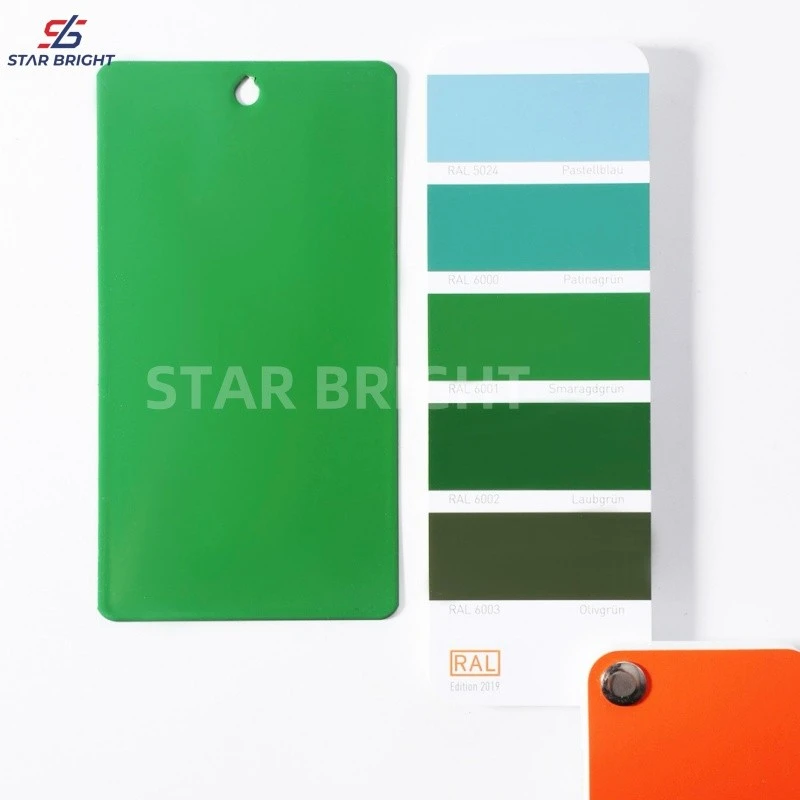
Now, let’s circle back to my role as a supplier. I don’t just sell spray guns or powder coatings—I help my customers troubleshoot these small, critical details. I’ve had a customer call last month saying they were getting terrible results on their aluminum bike frames, and when I asked about their nozzle, they admitted they’d been using a spare nozzle from an old gun that was too small for metallic powder. We swapped in a 1.7mm nozzle, paired it with their favorite Matt Aluminum Smoke Grey Powder Coating, and they got back to me the next day saying the finish looked exactly like the sample—no streaks, no wasted powder. That’s the kind of win that makes the small stuff matter.
At the end of the day, powder coating is all about precision, and the nozzle is where that precision starts. It’s the gatekeeper that shapes every spray, controls every particle, and ultimately decides whether your finish looks like a high-quality commercial job or a DIY mishap. If you’re someone who’s been ignoring your nozzle, take 5 minutes before your next job to check it, swap in the right size, and pair it with the powder that fits your vision. Whether you’re chasing a mirror-like finish with our High Glossy Aluminum RAL Grey Powder Coating or a soft, matte look with our Matte Aluminium Powder Coating Profile, the nozzle is the piece that ties everything together.
If you’re ready to upgrade your nozzle setup or pick up any of our specialized powder coatings, reach out to our team to talk through what works best for your projects. We don’t do one-size-fits-all solutions, and we’ll help you find the right parts to make your powder coating process smoother, more efficient, and full of consistent, great-looking finishes.
References:
- Powder Coating Technology: A Practical Guide (2021)
- Nozzle Design and Its Impact on Powder Atomization (Journal of Surface Coatings Technology, 2019)
- Powder Particle Size Distribution and Finish Quality (Industrial Finishing Magazine, 2022)
- Maintenance Best Practices for Powder Spray Gun Components (Spray Equipment Association, 2020)